
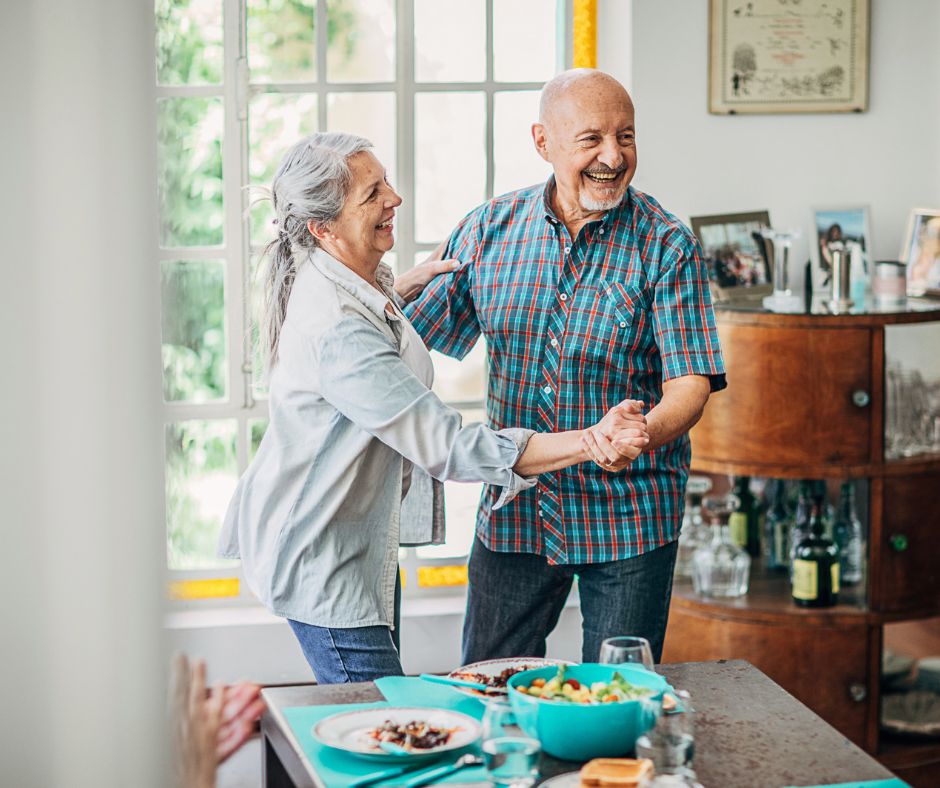
Ask someone living with dementia what they had for breakfast and you might get a long pause. Put on the song from their wedding day and you might get every word of the second verse, and a little shuffle round the kitchen.
If you’ve seen this happen, you’ll know it can take your breath away. For a few minutes, the person you love is right there with you again: tapping a foot, catching your eye, singing the harmony they always sang.
And if you haven’t seen it yet, it may be closer than you think. Music and dementia go together in a special way, because music has a way of finding a route in when other things get harder. Dementia UK says that even in the later stages, when other ways of communicating have faded, people can often still sing, hum or tap along to music they know. It isn’t a cure, and it won’t work every single time. But it’s free, it’s lovely, and it’s well worth a go.
Music and dementia: start with their songs, not yours
Playlist for Life, the charity Sally Magnusson founded after seeing what music did for her own mother, Mamie, says a personal playlist can help reduce anxiety, lift mood and even make difficult tasks a little easier. That’s why a personal playlist is one of the best places to start with music and dementia.
The golden rule is to choose what they love, not what you think they ought to enjoy. Songs from their teens and twenties are often the ones that stay longest, so start there.
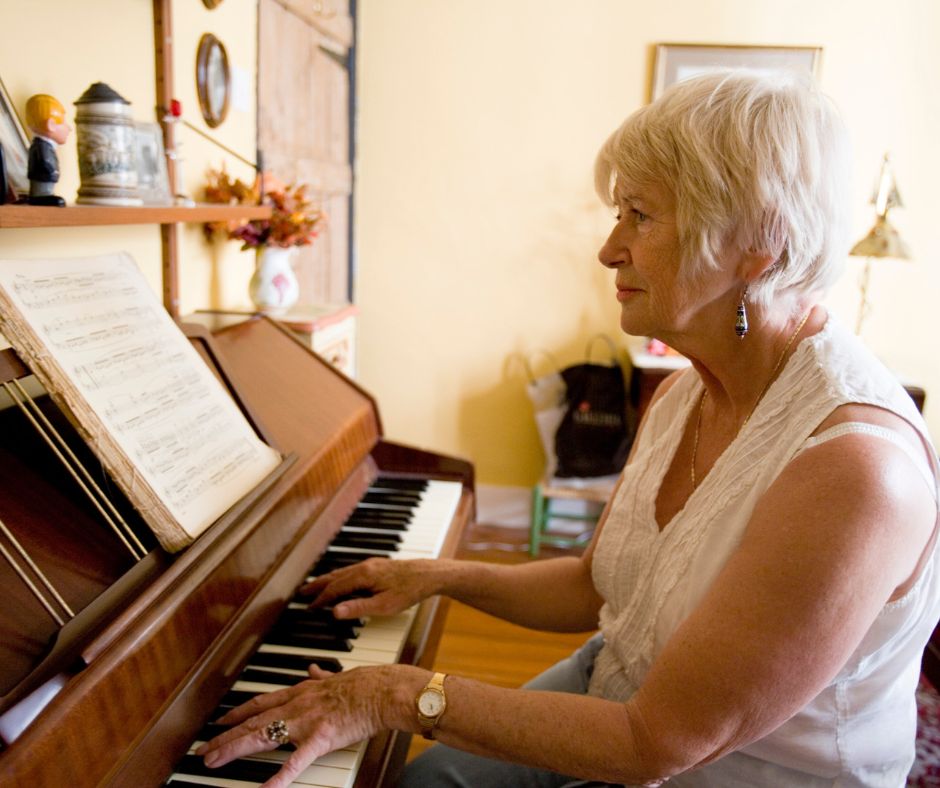
Think of yourself as a detective. Ask about:
-the first dance at their wedding
-the hymns from church, or the songs from school assembly
-the record that got played until it wore out in the front room
-the music from their first job, a favourite holiday, or Saturday nights out
-Brothers, sisters and old friends can be brilliant at filling in the gaps. And if you’re stuck on a decade, the free BBC Music Memories site lets you play short clips from different eras to see what sparks a reaction.
4 practical tips for music and dementia
–Jot things down. Note which songs get a reaction, and what kind: a smile, a tapping foot, a happy tear.
–Keep the kit simple. A one button radio or a CD player is often easier than a tablet with ten menus. Dementia UK suggests leaving a short set of instructions next to it, too.
–Use the free resources. Playlist for Life has free guides and conversation starters to help you build a playlist, and you don’t need any technology to begin.
–Mix it up. Gentle tunes for quiet moments, upbeat favourites for singing and dancing.
Go gently
Dementia UK suggests starting quietly and seeing how the person responds, as loud or fast music can feel overwhelming for some.
-Turn off the television or radio in the background so the music has the room to itself.
-Watch their face and body language. If a song isn’t landing, simply move on to the next one. Nobody’s marking it.
-If they start to sing, hum or tap along, join in.
-Be aware that some songs can stir up sad memories as well as happy ones. If a tune seems to upset them, let it go quietly.
-If clapping, swaying or a bit of dancing breaks out, wonderful. A tambourine or a shaker can be good fun for anyone who likes to join in, and even sitting and waving arms in time to the music counts.

One honest note about music and dementia
Some days music will bring a big smile. Other days you’ll get a quiet nod, and that’s perfectly fine too. Please don’t measure your efforts by the reaction. Sitting together with a song you both know is time well spent.
And if you’re finding things hard yourself, you’re not alone. Dementia UK’s Admiral Nurse Dementia Helpline is free on 0800 888 6678. If you have any worries about your loved one’s health or wellbeing, speak to their GP or a dementia specialist.
Singing together, close to home
There’s something special about singing with others who understand. Alzheimer’s Society runs Singing for the Brain, a group built around music and dementia, bringing people affected by dementia together to sing songs they know and love. You don’t have to be a good singer to enjoy it, and family and carers are welcome too.
There are groups right on our doorstep:
–Brentwood: Hutton Community Centre, Harrison Close, CM13 1LP. Third Tuesday of the month, 2pm to 3.30pm
–Billericay: Hannakins Farm Community Centre, Rosebay Avenue, CM12 0SY. First Wednesday of the month, 2.30pm to 4pm
The sessions are free, but booking is essential. Email essexgroups@alzheimers.org.uk or call 0333 150 3456 to check the latest dates. Online sessions are available too.
Where to find more
–Music for Dementia has practical guides on finding music they love, making a playlist and finding a singing group.
–Playlist for Life for free playlist guides and conversation starters.
–BBC Music Memories to discover songs from every decade.
-Dementia friendly performances. Keep an eye out for relaxed concerts, films and musicals near you, often listed by local theatres and cinemas.
How we can help
At Beaumont Home Care, we believe the best care feels personal, and that includes the little things that make someone feel like themselves. A favourite song while the kettle boils. A hymn hummed together on a Sunday. The record that always gets a smile.
We’d love to hear about the songs that matter to your loved one, so our Care Assistants can bring them into the day. We’re a family owned company based in Ingatestone, supporting families across Brentwood, Billericay, Shenfield, Chelmsford and Basildon.
If you’d like to talk about dementia care at home, or you’d simply like a friendly chat about where to start, get in touch with our team (swap in your real contact or dementia care page), call us on 01277 356645 or email info@beaumonthomecare.co.uk.
And tell us: which song would be on your playlist? We’d love to know.
Tracy Barnabas, Founder, Beaumont Home Care